
Complete removal of dead, dying, hazardous, or unwanted trees — from small yard trees to large removals requiring rigging or a crane.
One free call connects you with an independent licensed tree pro who covers your ZIP code. The pro provides a free estimate — you decide from there.
(866) 313-3285 · 24/7 for emergencies
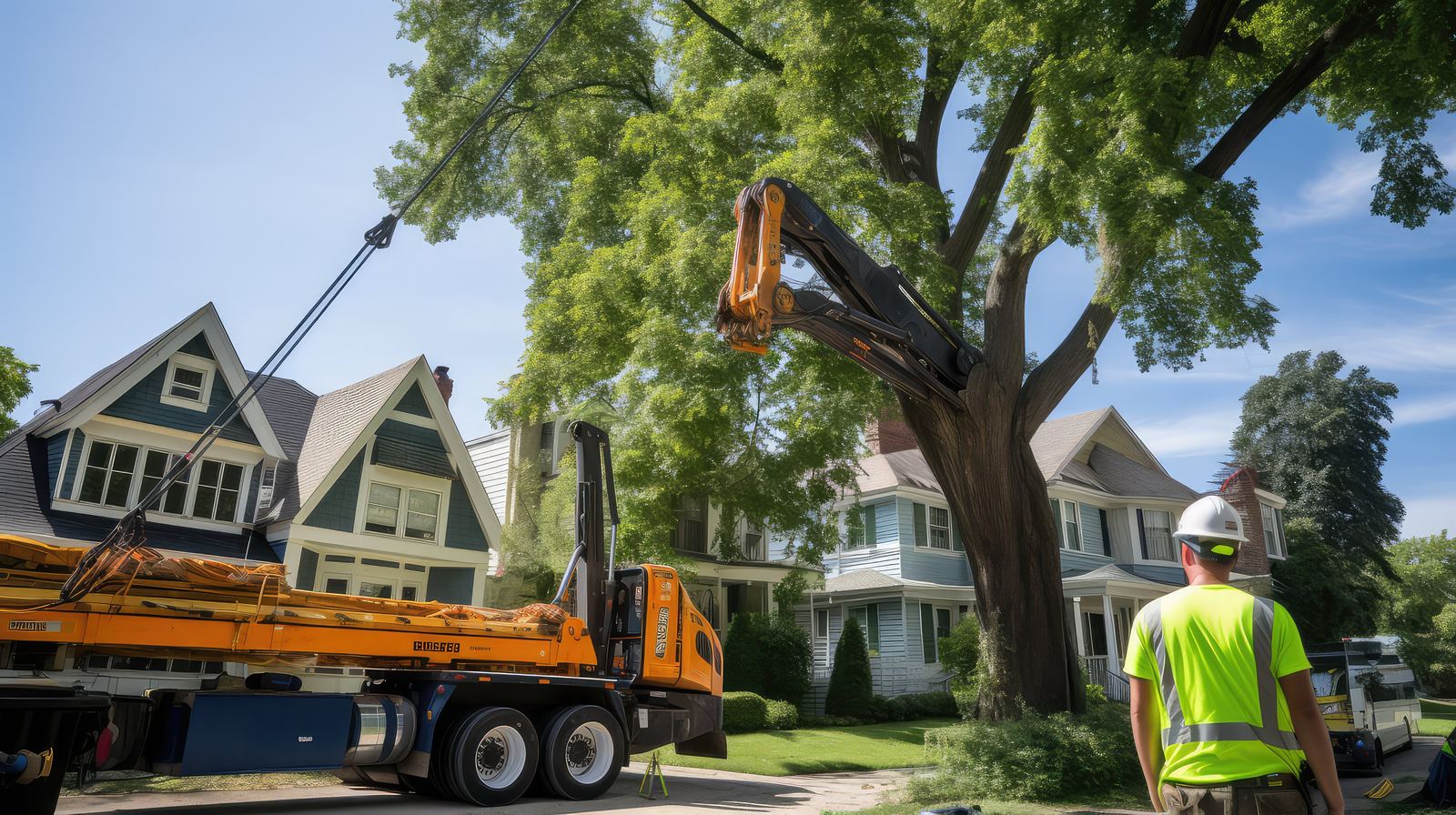
Professional tree removal is a controlled dismantling, not a lumberjack felling. For most residential removals the climber ascends the tree with rope and saddle (or works from a bucket truck), removes the limbs first, then takes the trunk down in sections — each piece rigged with ropes and lowered so nothing free-falls near your roof, fence, or power service line. Tight backyards may require a crane or a knuckleboom to lift sections over the house. The crew then chips the brush, bucks the trunk into rounds, and either hauls everything away or leaves firewood-length logs on request. The stump is ground separately — always confirm whether stump grinding is included in the quote, because on many bids it is not.
A healthy, well-placed tree may never need removal. Removal becomes the right call when a tree is dead, more than about 40% damaged or hollow, structurally compromised at the root plate, growing into foundations or service lines, or when a storm has already brought part of it down.
A trunk that splits vertically mid-cut can whip backward with enough force to kill. This is the classic DIY tree-felling fatality, and it's why pros section large trees instead of felling them whole in yards.
Branches don't have to touch a line to be lethal — electricity can arc. Any tree within 10 feet of a service drop or primary line calls for a pro, and often a utility coordination call before work starts.
Most serious injuries on tree jobs happen on the ground: cut sections bouncing, hinges failing, or helpers standing inside the drop zone. Professional crews run a controlled drop zone with a designated spotter.
Searching "tree removal near me" returns a mix of national directories and contractors who may or may not serve your ZIP code. TreeCrewFinder shortcuts that: call (866) 313-3285 and we connect you directly with an independent licensed tree removal pro who actually covers your area. The referral is free, and the pro gives you their own quote before any work begins.
Pricing depends on the tree's height and diameter, its species and condition (dead wood is more dangerous and often costs more to remove), how close it stands to structures and power lines, equipment access, and whether stump grinding and full debris haul-away are included. The licensed pro who takes your job sets the price with a free on-site or phone estimate — TreeCrewFinder's referral costs you nothing.
If a tree is too big for a handheld saw from the ground, it is too big for DIY — that's the honest threshold. Large-tree removal involves climbing, rigging, and sectional dismantling that professionals train years to do safely. A pro crew with a bucket truck or crane can typically remove even a very large tree in a day.
It depends on your city and sometimes on the tree itself. Many municipalities require permits for trees above a certain trunk diameter, for street-side trees, or for protected species; unincorporated rural areas often require nothing. The local pro you're matched with will know your area's rules and can usually handle the paperwork.
A small yard tree can come down in an hour or two. A large oak over a house with rigging on every limb is typically a full day, and crane removals are often scheduled as a half-day with the crane on site. Cleanup and hauling usually add an hour or two.
A careful crew protects your yard with plywood mats for heavy equipment and lowers sections on ropes instead of dropping them. Expect some sawdust and minor turf compression, but not craters. Ask the pro what their cleanup includes — most quotes cover raking out the work zone and chipping all brush.
Not automatically. A healthy, structurally sound tree near a house is often better managed with crown reduction, thinning, or cabling than removal. A pro assessment tells you whether the roots or canopy actually threaten the structure — and removal remains available if they do.
Usually only when the tree has fallen on a covered structure — a roof, garage, fence, or driveway — or blocks access. Insurance rarely pays to remove a standing tree preemptively, even a dead one. If a tree is on your house right now, call us for an emergency referral first, then your insurer; keep every receipt and photo.
Free referral, free estimate from the pro, no obligation. Emergencies answered 24/7.
Call (866) 313-3285 — Free Referral