
Grinding stumps below grade so you can mow, replant, or build — the standard finish after any removal.
One free call connects you with an independent licensed tree pro who covers your ZIP code. The pro provides a free estimate — you decide from there.
(866) 313-3285 · 24/7 for emergencies
A stump grinder is a carbide-toothed cutting wheel that sweeps side to side across the stump, chewing it into mulch a few inches per pass. Standard grinding goes 4–8 inches below grade — enough to cover with soil and seed grass. Deeper grinds (12–18 inches) are ordered when you're replanting, laying pavers, or building. The job produces a surprising volume of grindings: a large stump yields several wheelbarrow loads of wood-chip-and-soil mix, which either backfills the hole (it will settle as it decomposes) or gets hauled off. Pros locate underground utilities before grinding — always mention sprinkler lines, septic fields, and buried cable when you book.
Once per stump. The only repeat business in stumps is the one you didn't grind: suckering species like black locust, tree-of-heaven, and poplar resprout from live stumps and roots for years.
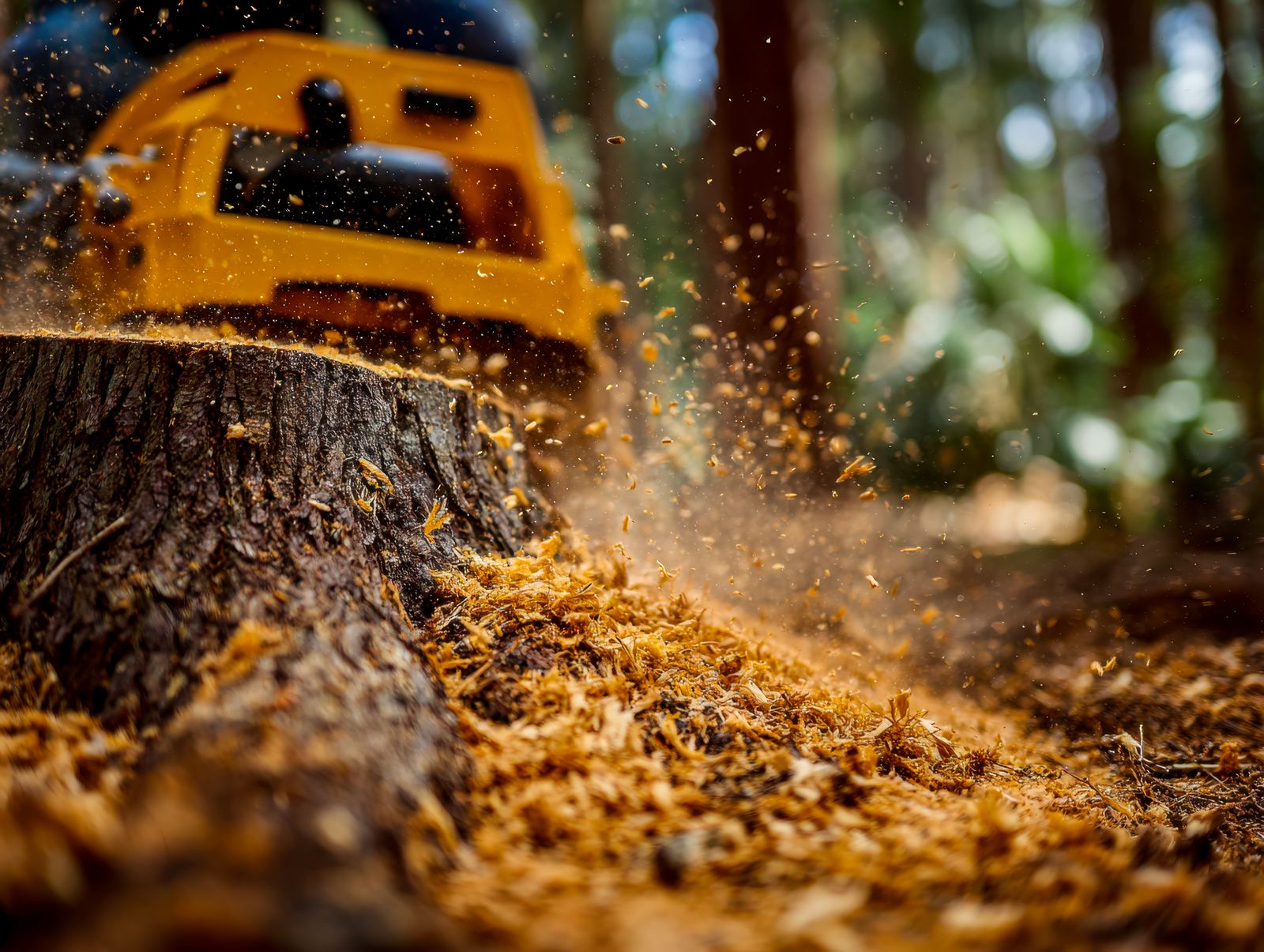
The cutting wheel launches wood and stone shrapnel at serious speed. Pros work behind guards and clear the area; the classic homeowner-rental injury is a bystander or a window.
Grinding into a gas service line or power conduit is catastrophic. An 811 locate is free everywhere in the U.S. — professional crews use it.
Rental grinders are lightweight; big hardwood stumps overwhelm them, and fatigue plus a bucking machine is how weekend grinding goes wrong. Large or old stumps are pro work.
Skip the "stump grinding near me" directory maze — call (866) 313-3285 and TreeCrewFinder matches you with an independent local pro with a grinder that fits your job, free of charge. Many pros discount multiple stumps ground in one visit, so mention every stump you've got.
Grinding pulverizes the stump below grade and leaves the roots to decompose naturally — fast, affordable, minimal yard damage. Full removal excavates the stump and root ball, leaving a large hole; it's reserved for construction sites and full landscape rebuilds. For 9 jobs out of 10, grinding is the right answer.
Priced mainly by stump diameter (measured at the widest point, including flare), plus depth required, hardwood vs. softwood, access, and how many stumps. One big backyard oak stump behind a narrow gate quotes differently than five pine stumps along an open driveway. The pro's quote is free; so is our referral.
Yes, with prep: the grindings must come out and be replaced with real soil, since decomposing chips rob nitrogen from new roots. Best practice is planting a few feet off the old spot, outside the old root mass. Ask the crew for a deeper grind if replanting in place.
For most species, yes — without the stump's energy the roots decompose over 5–10 years. The exceptions are aggressive suckering species (locust, ailanthus, some poplars), which may need targeted herbicide on fresh-cut sucker growth for a season or two.
Fifteen minutes to an hour for typical stumps once the machine is in place. Multi-stump jobs and monster old-growth stumps run longer. It's the fastest transformation in tree work — hazard to level ground before lunch.
Your choice: backfill the hole (expect settling as they break down — top up with soil after a season), spread them as mulch in beds, or have them hauled. Hauling adds work, so it affects the quote; say what you want up front.
A stump left alone becomes, in order: a mower obstacle, a sucker factory, a carpenter-ant apartment, and a honey-fungus reservoir that can infect nearby healthy trees. In a wooded back corner, leaving it is fine and feeds wildlife. In a lawn, grinding pays for itself in avoided annoyance.
Free referral, free estimate from the pro, no obligation. Emergencies answered 24/7.
Call (866) 313-3285 — Free Referral