
Shaping and maintaining hedges, shrubs, and ornamentals — privacy screens, foundation plantings, and restoration cuts.
One free call connects you with an independent licensed tree pro who covers your ZIP code. The pro provides a free estimate — you decide from there.
(866) 313-3285 · 24/7 for emergencies
Good hedge work is geometry plus biology. The geometry: flat-topped hedges sheared slightly wider at the base than the top, so lower growth keeps its sunlight — the detail that separates dense green walls from bare-bottomed hedges. The biology: knowing which species regrow from bare wood (yews, privet, boxwood — restorable with hard cuts) and which never do (most junipers, arborvitae, cypress — cut past the green and the hole is permanent). Crews shear for formal faces, hand-prune interior thinning so light reaches inside, and time work around bloom cycles for flowering shrubs. Restoration of overgrown hedges is staged across seasons rather than one brutal haircut.
Formal hedges: 2–3 shearings per growing season. Informal and flowering shrubs: annually, timed to bloom. Overgrown restoration: staged over 2–3 seasons.
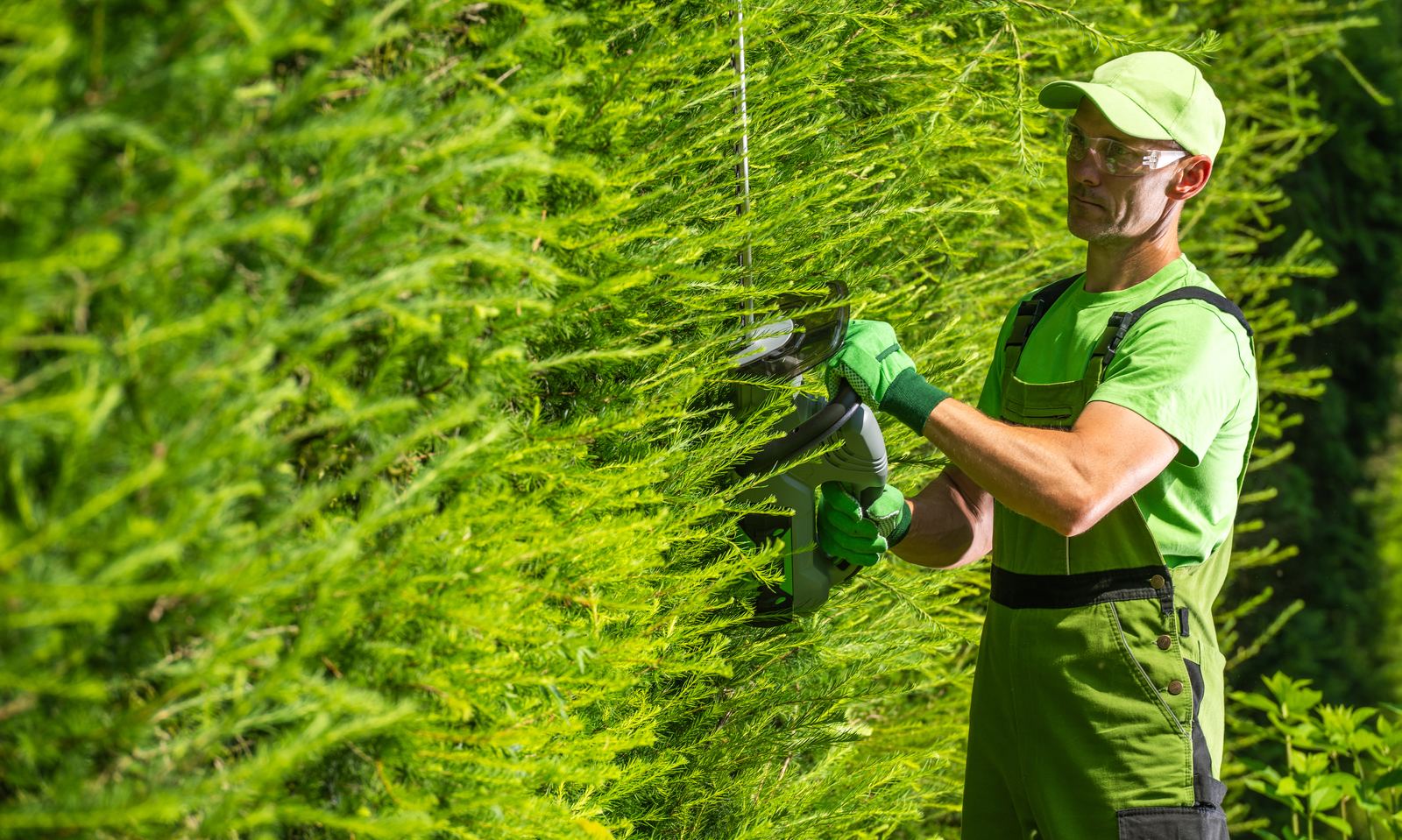
Powered hedge trimmers cause thousands of ER visits yearly — lacerations from clearing jams with the blade live, and falls running trimmers one-handed from ladders. The pro alternative is boring: platforms, both hands, blade stopped for every jam.
Hedges are bird housing. Trimming in peak nesting season destroys active nests — a legal problem for some species and an avoidable one everywhere. Pros check and schedule around it.
One over-deep pass on an arborvitae row converts a privacy screen into a row of brown skeletons — permanently. Species knowledge isn't optional; it's the whole difference.
Call (866) 313-3285 — TreeCrewFinder connects you free with an independent local crew that handles hedges, shrubs, and ornamentals, including the tall-hedge work (platform and lift jobs) that lawn services can't reach.
Priced by linear footage, height, how overgrown, formality (crisp faces take longer than natural shaping), and debris volume — sheared clippings pile up fast. Regular maintenance visits quote far better than rescue jobs; that's true of every hedge on earth.
Formal evergreen hedges: late spring after the first flush, again mid-summer, with a light early-fall pass — never late-fall cuts that push tender growth into frost. Spring-flowering shrubs (lilac, forsythia): immediately after bloom, or you're cutting off next year's flowers. Summer bloomers: late winter. The crew calendars this per species.
Depends entirely on species. Yews, privet, boxwood, holly: yes — staged hard cuts over 2–3 seasons rebuild a dense hedge from bare wood. Arborvitae, most junipers, false cypress: no — bare wood stays bare, and the honest options are living with the size, a slow reduction of green edges, or replacement. Know which you own before anyone cuts.
The top got wider than the base and shaded it out — the classic shearing mistake, compounded yearly. Fixable early by re-establishing the wider-base taper; hard to reverse once lower wood goes fully bare on species that don't back-bud. A restoration plan beats another same-shape shearing.
In snow country, rounded or peaked tops shed load — flat-topped hedges collect snow and splay open. In mild climates, flat formal tops are fine if the base stays widest. Either way the non-negotiable is the taper; the top profile is style.
Crews quote it both ways — haul-away or leave-piled. Shearings from a long hedge fill more truck than expected. If you compost, say so; if you want it spotless, say that. It's a real line item, not a rounding error.
Two windows to respect: peak bird nesting (check before cutting dense hedges in late spring), and the 6 weeks before your first frost (new growth pushed then gets winter-burned). Dead, broken, and hazard material ignores the calendar — that comes off whenever it appears.
Free referral, free estimate from the pro, no obligation. Emergencies answered 24/7.
Call (866) 313-3285 — Free Referral