
Tree care for businesses, HOAs, municipalities, and property managers — maintenance contracts, liability management, and storm response.
One free call connects you with an independent licensed tree pro who covers your ZIP code. The pro provides a free estimate — you decide from there.
(866) 313-3285 · 24/7 for emergencies
Commercial tree work is residential work plus paperwork, scale, and liability math. Property managers and HOAs run on scheduled maintenance contracts: annual or multi-year plans covering inspection cycles, pruning rotations by zone, storm-response priority, and documented risk assessments that matter enormously when an incident lawyer asks 'when did you last inspect that tree?' The operational realities: certificates of insurance naming the property, work windows around business hours and tenants, traffic control on parking lots and streetscapes, and invoicing that maps to budget line items. For retail and office properties, the trees ARE the curb appeal budget; for HOAs, they're the top source of both amenity value and board-meeting arguments.
Contract cadence: annual inspection minimum, pruning zones on 2–4 year rotations, palm and ornamental cycles per species, and a storm-response arrangement BEFORE storm season — post-disaster, contract clients get served first.
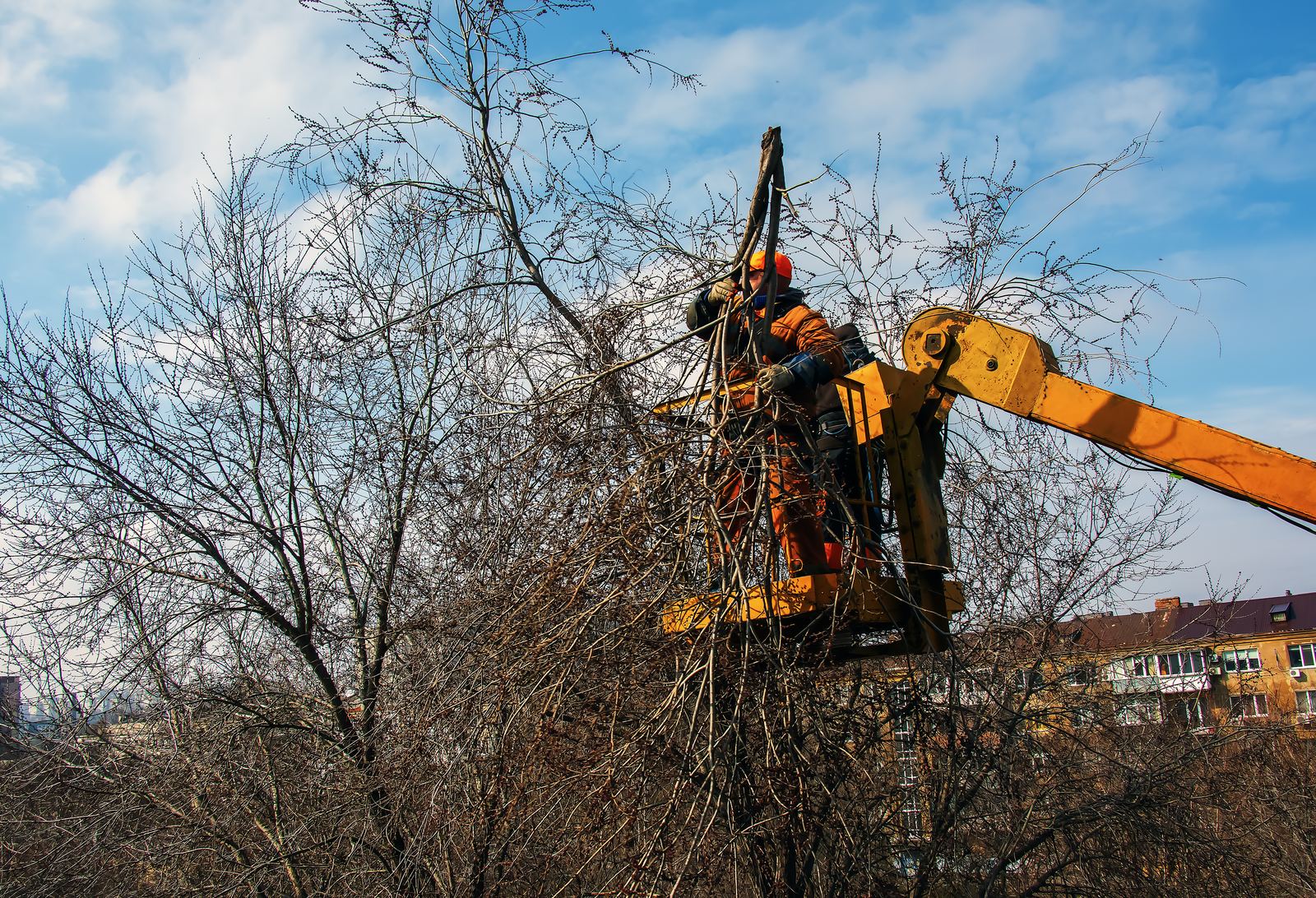
A tree that fails and injures someone becomes a records case: inspection logs and maintenance history are the property's defense. 'We never looked at it' is the sentence insurers dread. Scheduled professional care is cheaper than one incident's deductible.
Skipping pruning cycles doesn't save budget — it converts routine cuts into hazard removals and emergency calls at multiples of the cost. Tree budgets behave like roof budgets: pay a little always or a lot suddenly.
A landscaper's crew dropping a limb through a tenant's windshield without proper coverage becomes the property's problem. COI verification with adequate limits, every vendor, every year — boring and non-negotiable.
Call (866) 313-3285 and tell us what you manage — office, retail, HOA, industrial, municipal — and TreeCrewFinder connects you free with an independent local pro equipped for commercial scope: proper insurance certificates, crew capacity, and contract-based scheduling.
Two models: per-project quotes (a defined removal or pruning scope) and annual maintenance contracts (inspection cycles plus scheduled zone work, often with preferred storm-response rates). Contracts win for portfolios — predictable budgeting and first-in-line status after storms. The pro prices to your property's tree inventory; walkthrough and quote are free.
General liability at limits matching your property's requirements (commonly a million-plus), workers' compensation on every crew member (climbing is exactly the work where subcontractor 'independent' games end badly), and auto coverage for the equipment. Require a certificate of insurance naming the property before work starts — the pros in our network expect to be asked.
Annually at minimum, after any major storm, and on a documented schedule — the documentation being half the point. High-traffic zones (entrances, parking, playgrounds, sidewalks) warrant closer cycles than back-lot buffers. Ask for written inspection summaries; they're your liability file.
Standard professional practice: early-morning windows before retail hours, zone-by-zone scheduling, coned work areas and flagging for parking lots, and clean same-day debris removal. Say your constraints up front — good commercial crews build the plan around the property's business, not the reverse.
The good ones: a tree inventory (what and where), a zone-rotation pruning schedule, an annual hazard inspection with written findings, storm-response terms, and a replacement/planting pipeline so the community's canopy doesn't age out all at once. It converts tree care from board-meeting crisis topic to budget line.
The property — which is why the maintenance record matters more than the tree. Reasonable, documented care is the standard courts and insurers apply; a professional inspection and maintenance history is the difference between an act of nature and an act of negligence. That file is what a maintenance contract quietly builds.
Our network includes pros who handle municipal contracts, streetscape maintenance, and coordination with utilities for line-adjacent work (the utility itself clears its primary lines; property-side coordination is the contractor's job). Describe the scope when you call and we'll match to a crew that runs that kind of work.
Free referral, free estimate from the pro, no obligation. Emergencies answered 24/7.
Call (866) 313-3285 — Free Referral